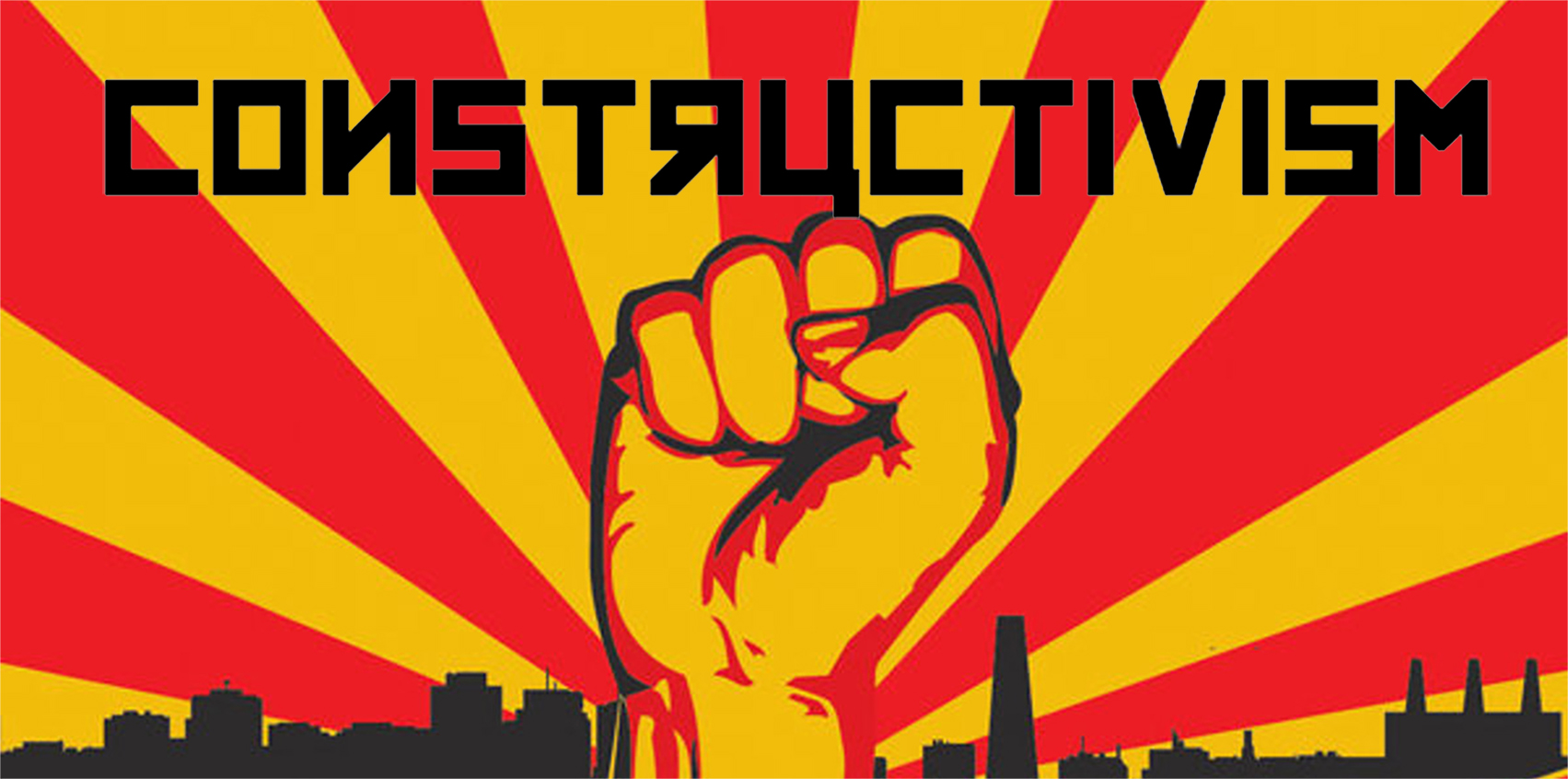
Russian Constructivism is a movement that starts from 1913 to 1940. This movement can be found in art, design, and architecture. The movement evolves and starts to be more powerful after the Russian Revolution in 1917.
This movement was meant to be used more in social purposes than an expression of the artist, one of the believes was that art can educate.
The techniques used were photo-montage and typography with a strong impact. The colour palette used is minimal, the most frequent colours used were red, black and yellow. Their goal was to change the society so the artist created dramatic pieces using angled type and layered images
This style was looking also for the meaning behind shapes and colours and where the white spaces were used as part of the design.
Constructivism has been influenced by Cubism, Suprematism, and Futurism.
The most associated artist like the father of the Constructivism is Vladimir Tatlin. The most famous work of the artist is Monumento to the Third International or more commonly known as Tatlin’s Tower.

Tatlin Tower | Vladimir Tatlin | St. Petersburg, Russia | 1920 | Image Source
Another very popular artist from this period is Alexander Rodchenko. He worked as a painter and graphic designer before starting on photomontage.

Constructivism is still be used nowadays in many places and designs such as album covers, movie posters, advertising…
One of the most known contemporary artists is Frank Shepard Fairey.
The most remarkable similarities are the use of geometric shapes, the use of the colours red and yellow, the use of circular and angled type, photo-montage on the piece. Another characteristic is the lack of colour that makes the piece very clear.

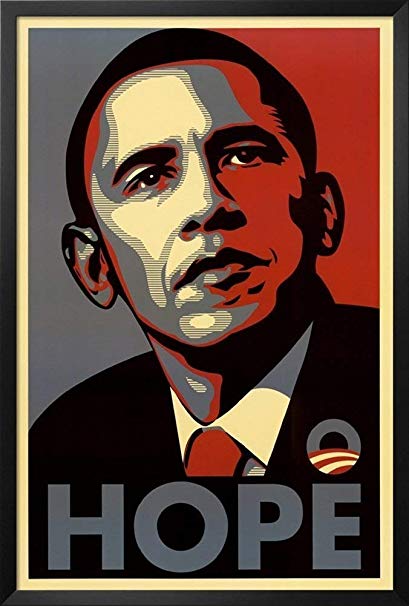
Figure 4 & 5
REFERENCES:
Images sources
- Figure 1 : Google.com. (2019). Russian Constructivism – Google Search. [online] Available at: https://www.google.com/search?q=Russian+Constructivism&rlz=1C1GCEA_enIE854IE854&source=lnms&tbm=isch&sa=X&ved=0ahUKEwi06Y7T1rvjAhUcQxUIHbdaBQUQ_AUIESgB&biw=1366&bih=657#imgrc=EB3BXJBBoyTjJM: [Accessed 17 Jul. 2019].
- Figure 2 : Wolfe, R. (2019). Tatlin’s tower. [online] The Charnel-House. Available at: https://thecharnelhouse.org/2015/03/24/tatlins-tower/ [Accessed 17 Jul. 2019].
- Figure 3 : Place-des-arts.com. (2019). RODTCHENKO Alexandre Poster Editions Lenguiz | Place des Arts – Paris. [online] Available at: http://www.place-des-arts.com/en/1617/1/RODTCHENKO-ALEXANDRE/16777/EDITIONS-LENGUIZ/ [Accessed 17 Jul. 2019].
- Figure 4 : Amazon.com. (2019). [online] Available at: https://www.amazon.com/Barack-Shepard-Fairey-Campaign-Poster/dp/B01M1JKI0E [Accessed 17 Jul. 2019].
- Figure 5 : one, S. (2019). Shepard Fairey Guerillia one – Ministry of Walls Street Art Gallery & Shop. [online] Ministry of Walls Street Art Gallery & Shop. Available at: https://www.ministryofwalls.com/produkt/shepard-fairey-guerillia-one/ [Accessed 17 Jul. 2019].
Biblioraphy:
- -Widewalls. (2019). Russian Constructivism – The True Vanguard Movement. [online] Available at: https://www.widewalls.ch/russian-constructivism/ [Accessed 17 Jul. 2019].
- -Strizver, I. (2019). Russian Constructivism and Graphic Design – CreativePro.com. [online] CreativePro.com. Available at: https://creativepro.com/russian-constructivism-and-graphic-design/ [Accessed 17 Jul. 2019].
- -En.wikipedia.org. (2019). Constructivism (art). [online] Available at: https://en.wikipedia.org/wiki/Constructivism_(art) [Accessed 17 Jul. 2019].
- -Arthistoryarchive.com. (2019). Russian Constructivism – The Russian Constructivism Art History Archive. [online] Available at: http://www.arthistoryarchive.com/arthistory/constructivism/ [Accessed 17 Jul. 2019].
- -The Art Story. (2019). Constructivism Movement Overview. [online] Available at: https://www.theartstory.org/movement-constructivism.htm [Accessed 17 Jul. 2019].
 Bogdan Design